Tallow for Baby Eczema: The Science Parents Need
Share
Why Most Natural Eczema Solutions Disappoint (And What Actually Works)
Your baby's inflamed, itching skin needs relief. You've tried the prescribed steroids that work temporarily but worry about long-term use. The "gentle" baby lotions made things worse. The organic balms smelled terrible and felt greasy.
Here's what the industry won't tell you: most natural eczema products fail because they prioritize marketing claims over actual formulation science. They use inferior ingredients, poor rendering processes, and mask problems with fragrances that irritate sensitive skin further.
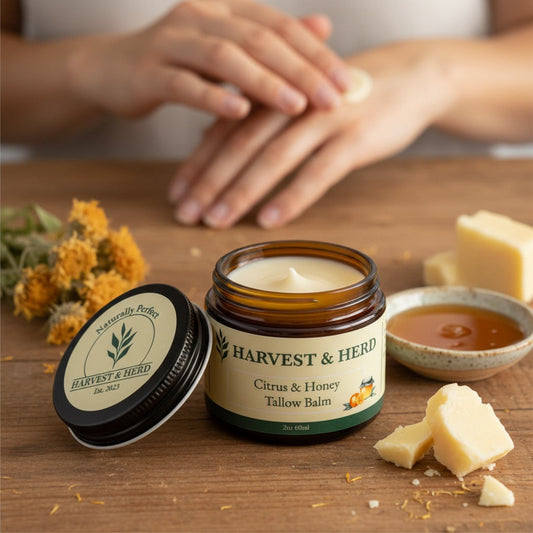
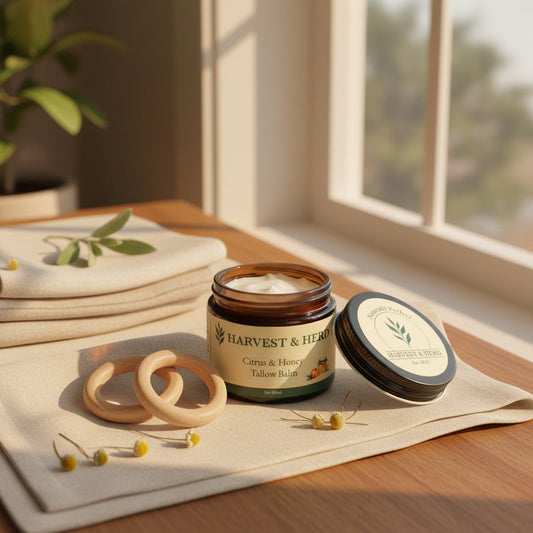
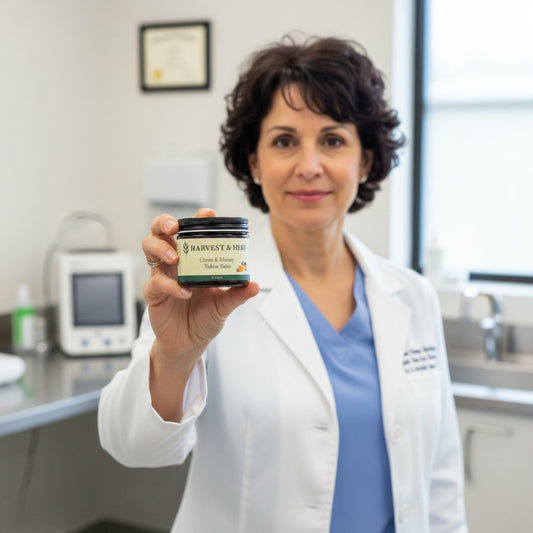
We spent over a year perfecting our Citrus & Honey Tallow Balm specifically because we understand what makes tallow work for eczema—and what ruins it. The difference isn't just in the ingredients; it's in understanding the precise science of skin barrier repair.
The Research That Changed Our Formulation Approach
Recent clinical research confirms what traditional knowledge suggested: tallow's fatty acid profile directly addresses eczema's root cause. A groundbreaking 2024 study by Niseteo et al. demonstrated that omega-3 fatty acid supplementation reduced eczema severity scores from 42 to 25—a 40% improvement—while cutting steroid use by 67%.1
But here's where it gets interesting for formulation: grass-fed tallow naturally contains these same omega-3 and omega-6 fatty acids, along with vitamins A, D, E, and K in their most bioavailable forms. The key is preserving these compounds through proper rendering and formulation.
"Tallow emulsions showed therapeutic potential for atopic dermatitis, with superior moisturization compared to conventional treatments in clinical testing." - Russell et al., 20242
This isn't coincidental. Your baby's skin barrier consists of specific lipids—oleic, palmitic, and stearic acids. Properly rendered tallow contains these exact fatty acids in remarkably similar ratios. It's essentially giving your baby's skin the precise materials it needs for repair, in a language it already understands.
Why Standard Tallow Balms Fall Short (And How We Fixed It)
Most tallow producers focus on the ingredient list without understanding the science. They render at high temperatures that destroy beneficial compounds. They whip air into their balms for easier texture—a shortcut that reduces efficacy. They add essential oils for scent, not realizing even "gentle" lavender can trigger reactions in eczema-prone skin.
We formulated our balm differently because we understand what compromised infant skin actually needs:
- Low-temperature rendering preserves heat-sensitive vitamins and fatty acids
- No whipping means concentrated therapeutic compounds, not air bubbles
- Honey integration provides natural antimicrobial properties without synthetic preservatives
- Citrus achieved through sweet orange blossom oil at minimal concentrations—enough for a pleasant experience without irritation risk
The result? A balm that's genuinely smooth without shortcuts, naturally antimicrobial without harsh preservatives, and pleasant to use without triggering sensitivities.
The Safety Standards That Actually Matter
When formulating for infant skin, especially compromised barriers, every decision matters. Here's what separates properly formulated tallow from amateur attempts:
Source Quality Controls
We use exclusively grass-fed, grass-finished beef tallow. Why does finishing matter? Grain-finishing changes the fatty acid profile, reducing omega-3 content and increasing inflammatory omega-6 ratios. For eczema management, this distinction is critical.
Rendering Precision
Temperature control during rendering determines whether you're creating medicine or cooking grease. We maintain temperatures below 95°C throughout the process—hot enough for purification, cool enough to preserve therapeutic compounds. No bleaches. No deodorizers. No shortcuts.
Formulation Integrity
Our Citrus & Honey Tallow Balm contains grass-fed beef tallow, raw honey, olive oil, and beeswax as the foundation. We then add specific therapeutic ingredients: royal jelly for additional healing factors, and carefully selected essential oils (sandalwood, frankincense, palmarosa, rosalina, neroli, sweet orange blossom) at concentrations tested for both efficacy and gentleness.
Each ingredient serves a specific purpose. There's no filler, no synthetic fragrance to mask poor-quality tallow, no preservatives that could trigger reactions.
Application: The Technique That Maximizes Results
Even the best formulation needs proper application. Here's the professional approach we recommend:
The Patch Test Protocol
Before full application, always test on a small area of clear skin (inner arm works well). Apply a rice-grain amount, wait 24-48 hours, and monitor for any reaction. This isn't overcaution, it's smart practice with any new product on sensitive skin.
The Soak-and-Seal Method
Timing matters more than quantity. After a lukewarm bath (hot water increases inflammation), pat skin until it's barely damp. Apply tallow balm within three minutes while pores are still open and skin retains moisture. This technique, endorsed by the American Academy of Pediatrics, maximizes absorption and barrier repair.3
Use approximately a pea-sized amount. Warm it between your fingers first—proper tallow balm melts at body temperature without needing aggressive rubbing.
Frequency and Expectations
Apply once daily for maintenance, twice during active flares. Most parents report visible improvement within 5-7 days, with significant changes by week two. This isn't overnight magic, it's steady, sustained healing as the skin barrier rebuilds.
Common Questions From Discerning Parents
"How do I know if the tallow is actually high quality?"
Quality tallow has almost no scent when properly rendered—maybe a faint, clean smell that dissipates immediately. If it smells beefy or rancid, the rendering was inadequate. If it's completely scentless or perfumed, it's been heavily processed or masked with fragrance.
"What if my baby has a beef allergy?"
True beef allergy affects less than 0.3% of children and typically involves ingestion, not topical application. However, if your child has confirmed beef sensitivity, skip tallow entirely. There's no shame in choosing alternatives, what matters is finding what works for your child.
"Can I make this myself?"
Technically? Yes. Should you? Probably not for infant eczema. Home rendering rarely achieves the temperature precision and purity standards needed for therapeutic use. Microbial contamination risks increase significantly without proper equipment and testing protocols. This is one area where professional formulation matters.
The Bigger Picture: Integrating Tallow Into Comprehensive Care
Tallow balm isn't a magic cure—it's a tool in your eczema management toolkit. The most successful approach combines:
- Barrier repair through properly formulated tallow application
- Trigger identification and avoidance (common culprits: heat, synthetic fabrics, certain foods)
- Medical partnership with your pediatrician for severe flares
- Environmental optimization including humidification and gentle, fragrance-free laundry practices
Some parents successfully use tallow balm to extend periods between steroid applications. Others find it completely replaces their need for prescription treatments. Every child's skin responds differently, which is why we emphasize testing and observation over promises.
Why We Refuse to Compromise on Formulation
We could make our tallow balm cheaper by whipping it with air. We could make production easier by using synthetic preservatives. We could appeal to more customers by adding stronger fragrances or making overblown claims.
Instead, we chose the harder path: sourcing the best raw materials, maintaining strict temperature controls, and formulating for actual results rather than marketing appeal. Because when it comes to your baby's skin, "good enough" isn't good enough.
Our Citrus & Honey Tallow Balm represents what's possible when you refuse to accept the industry standard. It's not the cheapest option, and we're fine with that. Quality costs more than shortcuts.
Making an Informed Decision
Your baby's eczema demands real solutions, not marketing fluff. The research supporting tallow's efficacy is compelling—fatty acid profiles that match skin's needs, vitamin content that supports healing, and a safety profile that beats synthetic alternatives.
But research means nothing without proper formulation. That's the difference between tallow that works and tallow that disappoints. Understanding this distinction helps you evaluate products based on what matters: source quality, rendering precision, and formulation integrity.
Whether you choose our balm or another option, now you know what questions to ask and what standards to demand. Your baby's skin deserves nothing less than the best formulation science can deliver.
References
1. Niseteo, T., Hojsak, I., Ožanić Bulić, S., & Pustišek, N. (2024). Effect of Omega-3 Polyunsaturated Fatty Acid Supplementation on Clinical Outcome of Atopic Dermatitis in Children. Nutrients, 16(17), 2829. https://doi.org/10.3390/nu16172829
2. Russell, M. F., et al. (2024). Tallow, rendered animal fat, and its biocompatibility with skin: A scoping review. Cureus, 16(5), e60651. https://pmc.ncbi.nlm.nih.gov/articles/PMC11193910/
3. American Academy of Pediatrics Committee on Dermatology. (2025). Atopic Dermatitis: Update on Skin-Directed Management. Pediatrics, 155(6), e2025071812.